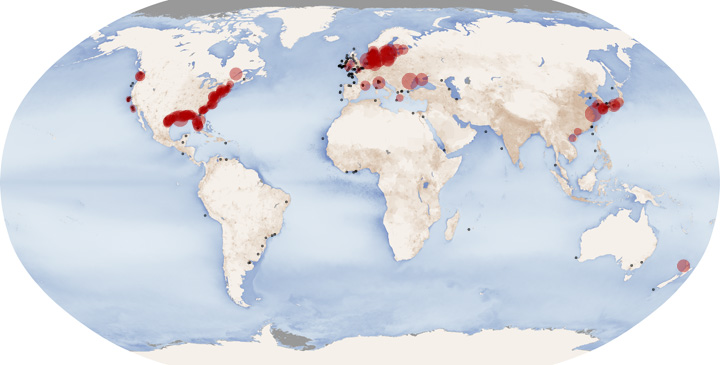
Red circles show the location and size of many dead zones.
Black dots show dead zones of unknown size.
The size and number of marine dead zones—areas where the deep water is so low in dissolved oxygen that sea creatures can’t survive—have grown explosively in the past half-century. – NASA Earth Observatory
Dead zones are areas in the oceans or other large bodies of water, where the dissolved oxygen concentration is so low that marine life can no longer be supported. The largest anthropogenic factors effecting dead zones are agriculture and pollution from industry. Phosphates and nitrogen are the main nutrients to be concerned with because they fuel algal blooms. The algae eventually die, sink to the bottom, and become food for bacteria that aide in decomposition, but consume oxygen.
In 2008, a study found 405 dead zones worldwide (up from 146 in 2004). The largest in the U.S. is the mouth of the Mississippi River, which empties into the Gulf of Mexico. This area is approximately 8.500 square miles (roughly the size of New Jersey).
For More Information Regarding Dead Zones:
San Francisco Chronicle: Scientist Alarmed by Ocean Dead-Zone Growth