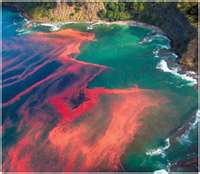
Image from www.thew2o.net
Algae are microscopic, single-celled plants that live in aquatic environments. An algal bloom is an increase in production of algae. There are 5000 algae species and less than 5 percent have toxic effects. These algae produce harmful neurotoxins and hepatoxins that can have potentially fatal effects upon anything that consumes them. There are different types of harmful algal blooms and each different species produces a different color in the water. Green, blue, red, brown, yellow, and orange are all examples of the colors that these algal blooms can produce.
Several things cause these blooms however a large component is nutrient runoff from fertilizer. The nitrogen and phosphate within the fertilizer rapidly increases the nutrients within the water and increases the number of algae. Other reasons for algal blooms are water temperature, light, and turbidity of water.
Amnesic Shellfish Poisoning (ASP), Paralytic Shellfish Poisoning (PSP), Diarrhetic Shellfish Poisoing (DSP), Neurotoxic Shellfish Poisoning (NSP), Ciguatera Fish Poisoning (CFP) are all of the different types of toxic reactions that occur from wildlife consuming toxic algae. When fish are exposed to these different types of algae there can be extremely negative impacts included massive fish kills.
More information regarding algal blooms: