July is the perfect time to evaluate the value of a tree, if for nothing other than the shade it provides. If valuing a tree for its shade makes sense to you, then you grasp the basic concept behind ecosystems services. Ecologists talk about ecosystem services as the goods, processes, and other benefits that human populations get from functioning ecosystems.
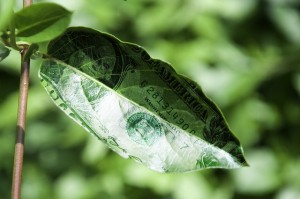
Photo by Joe Santos
Now, if, on a hot day in the middle of an Indiana summer, you have ever thought to yourself, “I’d happily pay a few bucks for some shade right now,” you also get the basic concept of valuing those ecosystem services. Coming to understand just what those ecosystem values are worth in terms of dollars is a recent exercise among ecologists and economists.
When the first attempt to estimate the value of ecosystem services on a global scale was conducted, the value ($33 trillion annually) of ecosystem services came in well above global gross national product (about $18 trillion in 1997). The irony is that all too frequently the global gross national product is realized by reducing the capacity of the ecosystems to provide the services upon which we depend. Over the last two decades, ecologists and economists have worked to refine models used to estimate the monetary value of ecosystem services. Today those models look at the value of not just ecosystems, but even the ecosystem services of a single city tree.
The USDA has partnered with arborists and nonprofits to develop tools to help understand the monetary value of trees within urban ecosystems. The tree calculator looks at just a small subset of ecosystem services: stormwater abatement, air quality improvements, savings on heating and cooling, carbon sequestration, and increases in property value. The value is determined by looking at what type of tree species, how large it is and its context within the city (i.e., near single family housing or in an industrial setting).
A 2008 report on the municipal forest resources of Indianapolis shows just how valuable the city’s trees are. Using models similar to the tree calculator, the report estimates that Indianapolis’ trees prevent nearly 320 million gallons of stormwater from having to be processed by the waste water treatment plant. The trees take out more than 18 million pounds of carbon dioxide from the atmosphere. They save nearly $600,000 annually in heat and cooling costs (there you have it – shade is worth 600K!). Street trees in Indianapolis are responsible for increases in property value equal to more than $2.8 million. And this report considers only the trees that belong to the city…imagine the value if every tree found on a private homeowners lot is taken in to consideration.
It is true that Indianapolis spends money on maintaining the urban forest. But the 2008 analysis shows that for every dollar spent, more than six dollars are returned on the investment. This is why Indianapolis and non-profit partners like Keep Indianapolis Beautiful have planted more than 30,000 trees since 2006. The true worth of that effort us difficult to understand until you appreciate all the different things those trees are doing, largely without notice.