


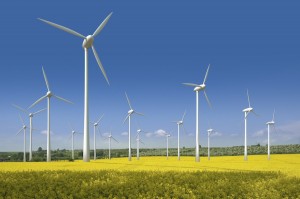
 The strongest and most resilient economy in the western world has arguably been that of Germany. On a recent trip there I was impressed to learn that they weathered the recession and have an unemployment rate around four percent. One of their areas of substantial growth in the past decades has been in the development and harnessing of renewable energy.
Not too long ago, Germany was home to some of the most polluted areas on earth. These areas included the industrialized Ruhr Valley and former eastern Germany. Their industries relied heavily on very dirty brown coal.
It is noteworthy that Germany has a climate very similar to Indiana.
To meet their needs for sustainable growth and a cleaner environment Germany turned its focus to renewable energy — with great success. Furthermore, recognizing the dangers of nuclear energy, Chancellor Angela Merkel, a conservative politician and a trained physicist, has declared that all German nuclear power plants should be shut down by 2020.
That is a powerful statement from a conservative leader in a country with few natural resources.
Where will the energy come from to power the German economy and sustain the lifestyle to which Germans are accustomed?
Renewable energies such as wind, solar and biogas will be leaders. Many large farms not only have solar arrays on their barns or wind turbines in their fields, but are also producing energy from the methane of manures. The roofs of everything from auto dealerships to factories are covered by solar panels, and windmills in appropriate areas are commonplace.
Germans have recognized that decentralized power production can play a pivotal role not only in powering their economy but also in providing income to more of their countrymen through energy production.
We must really take a hard look at how we obtain energy in our country. The statement “Clean Coal” is an oxymoron. Coal is mined at great expense to the environment and the miners doing the work. Nearly 70,000 men have died as a direct result of their involvement in the industry. Mountaintops are removed, forests laid to waste, rivers ruined and wildlife eradicated — all in the name of cheap energy.
The recent natural gas bonanza — via fracking — has many Americans anxious about the safety of their groundwater supplies.
Consumers have been lulled into a sense of complacency by the endless misstatements by the coal and oil industries. For the above enumerated reasons and the fact that renewable energy is no longer impossibly expensive, all consumers should review their opportunities to become part of our nation’s energy solution.
We are all part of the solution! I would also invite you to think about which candidates are discussing not only the environment we live in today, but also the environment future generations need to be able to inhabit.
Michael Greven of Ecosource Inc. is currently working in Eldoret, Kenya, with the IU Kenya program. Learn more about the excellent work IU and Purdue are doing by going to www.ampathkenya.org. While in Kenya, Greven is focused on fostering solar energy and renewable design