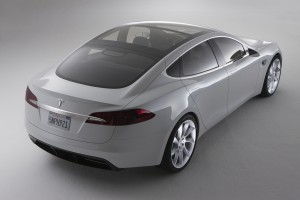
The Tesla Model S. (Submitted photo)
Named for Nikola Tesla, the engineer, physicist and inventor best known for his work as a consult at Westinghouse where he developed the modern alternating current electricity supply system, the Tesla Model S is an innovative all-electric plug-in luxury sport sedan.
Dubbed by Consumer Reports as the best car it ever tested, with “off the charts” overall performance, the Model S ranks as one of the most energy-efficient and quietest vehicles in production. But it’s the car’s acceleration, braking and ride quality that impress.
There are two versions of the Tesla, both of which are capable of producing impressive horsepower and torque: the Model S and the Model S Performance. Various model and battery options provide different ranges and performance characteristics.
- The Model S 60kWh option produces 302 hp, with a range of 208 miles. It’s capable of going from zero to 60 in 5.9 seconds. Sticker price starts at $62,400.
- The Model S 85 kWh option produces 283 hp, with a range of 265 miles. It’s capable of going from zero to 60 in 5.4 seconds. Sticker price starts at $72,400.
- The top-of-the-line 85 kWh Model S Performance option produces 416 hp, with a range of 265 miles. It’s capable of going from zero to 60 in an impressive 4.2 seconds. Sticker price starts at $87,400, which includes upgraded drivetrain, interior and suspension.
Like any high-performance luxury sedan, the Model S comes with a hefty price tag. However, a $7,500 federal tax rebate and various state tax incentives for electric cars put the Tesla within reach of the modestly wealthy.
In fact, the Model S is currently outselling other full-size luxury sedans such as the Audi A8, Lexus LS, Mercedes-Benz S Class and BMW 7-Series. In the first quarter, more people bought a Tesla Model S than any of the similarly priced, traditionally powered cars from the top three German manufacturers, according to LMC Automotive.
The lithium-ion batteries, which carry an 8-year warranty, come with a 110-volt standard household outlet adapter, a 240-volt outlet adapter and a J1772 public charging station adapter. A full charge takes about six hours from a 240-volt outlet, according to Tesla. Bigger battery packs can also use a dual charging system that can charge in half the time.
Tesla is also building a network of high-speed superchargers that promise 160 miles worth of charge in only 30 minutes. Regardless, with its long-distance capability limited and its reliability untested, for most, the Model S remains a daily driver rather than a long-distance traveler.
Professional testers claim it drives just like a conventionally powered vehicle, but it’s difficult to score a test drive because Tesla is the only U.S. automaker whose business model is based on selling directly to consumers rather than relying on a dealer network. Operating on a build-to-order basis, Tesla has sales outlets in select malls in 12 states. Cars are delivered directly to the customer.
It’s a challenge to the traditional auto industry that is meeting with opposition from lawmakers in some states. North Carolina legislators recently approved a bill outlawing direct car sales. Minnesota, Massachusetts and New York have already defeated legal challenges banning the manufacturer.
Undeterred, Tesla has plans to build the Model X, a crossover SUV, a less expensive car and possibly other models.