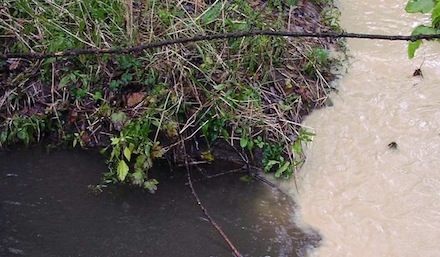
Legal Environmental Aid Foundation (LEAF) of Indiana recently obtained a $100,000 settlement against developers for numerous violations of Rule 5 — violations that caused harm to the Salt Creek watershed in northwest Indiana.
Rule 5 grew out of the Clean Water Act, requiring developers to regulate sediment run-off from construction sites that are one acre and larger. The Indiana Department of Environmental Management (IDEM) is charged with implementing this law, but according to LEAF’s Executive Director, Kim Ferraro, IDEM “unfortunately… rarely, if ever, enforces Rule 5.”
Salt Creek, on IDEM’s impaired waters list, is a watershed whose challenges include soil erosion and stormwater runoff. This creates what is called turbidity, a muddiness that blocks sunlight from reaching aquatic plants. Oxygen in the water is depleted as well, along with a reduction of water depth due to sediment buildup.
Back in 2004, developers clear-cut all vegetation from 14 acres of forested property to build a residential subdivision in Valparaiso. The developers, says Ferraro, “failed to institute and maintain even minimal soil erosion and stormwater control measures,” enabling more than 8,000 tons of soil and sediment to end up in the Salt Creek watershed.
LEAF filed a lawsuit in 2007 on behalf of property owners Geoff and Maria Blanco, against the developers, resulting in a $100,000 settlement. This money will be used to remediate a wetland on the Blanco’s property. Developers agreed to adhere to erosion/sediment controls if they proceed with additional construction.
According to Ferraro, “the case sets positive precedent in Indiana that sends a message to IDEM and developers alike that Rule 5 is more than a lofty goal — it is the law — and LEAF will hold them accountable if they fail to follow it.”