By Adam Moskowitz
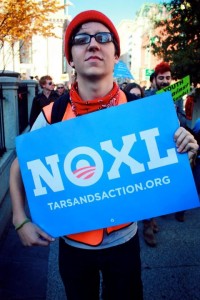
Submitted photo
Growing up as a teenager in Maryland, one of my favorite things to do was take the train down to DC so I could practice my right to free speech. With my long hair tied into a ponytail and a political sticker slapped on my T-shirt, I would show up at countless rallies just to have my voice heard. All I wanted was peace, justice, and for everybody to get along. And as long as I showed up outside of the White House with a handwritten sign and a catchy slogan to yell, I believed that these ideals were not too much to ask for. But at the end of the day, when my voice was hoarse from chanting, this utopia that I thought was so real never got any closer.
Somehow, even though I would march in these huge groups of people, I still felt isolated. Most of the people I met at these protests were of my parents’ generation, and they all wanted different things. Some wanted to end the war in Iraq, some wanted to end the war on drugs, and some wanted to end the government altogether. It was hard for me to find common ground with these people who’d been marching and yelling since the Vietnam War.
Everything shifted, however, when I learned about climate change. As a direct threat to my generation and to all young people worldwide, I quickly found solidarity in the burgeoning movement to save our climate. And, as we are the ones that must deal with the mistakes of the generations before us, it has been young people who have been leading the fight for a sustainable future.
Now that I’m a little older, and my hair is a lot shorter, I’ve been keeping up that fight. I moved to Indiana to attend Earlham College, where both my parents graduated from, so I could learn what it takes to ensure that my children will have a healthy world to live in. It didn’t take me long, however, to see that climate change is not just a problem of the future. After witnessing crop-killing heat waves and last year’s disturbingly mild winter, I knew that Indiana’s farmland is in just as much danger as Maryland’s receding coastline.
That is why, at Earlham College, I’ve been putting off papers and working through Saturdays to help launch our RE-Investment Campaign. As a project of the Earlham Environmental Action Coalition, we are working with our administration to remove our endowment’s holdings in the dirtiest coal companies and move that money into more socially responsible investments.
Littered with coal-fired power plants, Indiana is one of the largest producers of coal power in the nation. Not surprisingly, Indiana is also repeatedly ranked as one of the top five states for power plant emissions of toxic heavy metals, including arsenic, lead and mercury, according to a 2011 report by the Environment Integrity Project. The Clean Air Task Force estimates that, because of toxic emissions like these, Indiana suffered around 550 coal-related mortalities in 2010 alone.
Knowing that my school is financially backing King Coal is disappointing, but also presents us with an opportunity. If we move our money now, while Appalachian coalmines are shutting down and thousands of miners are being left without jobs, we can invest in socially positive ventures that would strengthen communities and the environment. Whether that means funding windmills in the mountains of West Virginia or supporting organic farmers throughout the Midwest, colleges are in the unique position to create a better future not just with their graduates, but with their financial portfolios as well.
At some point in my college career, it dawned on me that my degree was going to be useless if I didn’t have a world that could justly sustain my children. And I won’t settle for only my children, but everybody’s children, no matter what they look like or where they live. It’s been a few years since my days picketing at the White House after class, but looking back, I know that the future I was looking for was a just climate for all.
Adam Moskowitz is a student at Earlham, currently studying in New Zealand.