


Image from babajidesalu.wordpress.com
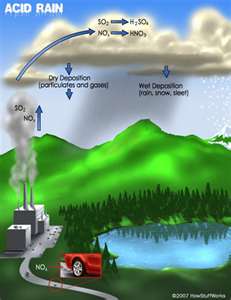
Acid rain is the deposit of wet and dry material from the atmosphere that contains abnormally high levels of sulfuric and nitric acids. Volcanoes and vegetable decay are natural causes of acid rain. However, the human-driven combustion of fossil fuels also contributes to acid rain due to the resulting emissions of sulfur dioxide and nitrogen oxides.
These gases give rise to acid rain when they react with water, oxygen, and other chemicals in the atmosphere. Acid rain can be deposited hundreds of miles from the source of pollution. It can manifest itself in traditional forms of precipitation such as rain, snow, and fog. However, the acidic chemicals can also be assimilated into dust and smoke.
Levels of acid rain are measured by the pH scale. The EPA supports the National Atmospheric Deposition Program for the measurement of wet deposition and the Clean Air Status and Trends Network for dry deposition.
Acid rain can damage trees and disrupt the chemical balance of lakes, streams, and soil. Structural elements of buildings can be damaged as well as decorative elements like paint and statues. Animals in affected areas have been unable to adapt quickly enough to more acidic water and can have trouble with reproduction. Health problems can also result in humans.
For more information regarding acid rain:
Environmental Protection Agency